
The highest single-day spike in Delhi till date -- 8,593 cases -- was reported on November 11 in 2020, while on November 19, the city had recorded 131 COVID-19 deaths, the highest single-day fatality count till date.

Even in terms of new single-day cases, Delhi reported the highest number of infections, followed by Kerala and Maharashtra.

As daily testing of samples of blood and throat and nose swabs crossed two lakh for the first time since the outbreak of the pandemic, over 14,000 new coronavirus cases were registered in the country for the fifth day in a row to take the total count to 4,56,183, according to the Union Health Ministry data.
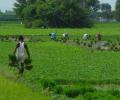
Earlier this month, the Central government said in a reply in Parliament it had taken measures to double farmers' income by the end of FY23 and the progress made so far indicated it was "on the right track". However, a close look at the data and at the assumptions made shows that as of now, it appears the country is unlikely to achieve the goal in real terms.

You may no longer have to rely on international size charts.

India has one of the lowest cases per million at 1,469 as against the global average of 2,425, the government said.

The death toll due to the disease rose to 42,518 with 933 fresh fatalities being reported in a day, data updated at 8 am showed. There are 6,19,088 active cases of COVID-19, comprising 29.64 per cent of the caseload.

After the Ukraine war, coke prices just soared and most units don't have money left to buy raw material. Customers are not absorbing the price escalation'

In a series of tweets, the senior leader of the ruling Bharatiya Janata Party also alleged that the legacy data were manipulated for including names of doubtful persons as alleged by many.
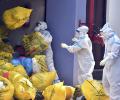
The coronavirus variant B.1.617 first identified in India last year has been classified as a "variant of global concern", with some preliminary studies showing that it spreads more easily, a senior WHO official had said on Monday.

Deaths are significantly less in the third wave of the Covid-19 pandemic in comparison to the second wave, and the current surge is not witnessing increase in severe illness or death following high vaccination uptake, the government said on Thursday.

The Maharashtra government has decided to stop home quarantining of COVID-19 patients in 18 districts where the positivity rate is high and all active patients in these areas would be admitted to COVID Care Centers, health minister Rajesh Tope said.

Men's exclusion from the reproductive debate contributes to gender inequalities, a study has revealed.

Vardhan emphasised on how the Indian traditional system of medicine has also contributed substantially in boosting the immunity of general population during COVID-19.

The recovery rate among COVID-19 patients has increased to 64.51 per cent.

According to the ministry's data, Maharashtra is on the top of the list with most COVID-19 cases, 5,652 cases of which 789 patients have recovered and 269 patients succumbing to coronavirus.

Social stigma and low testing are the key reasons for the high mortality rate among COVID-19 patients in West Bengal, where the disease, like elsewhere in the country, is still an urban phenomenon, experts say. The state's Trinamool Congress government has been drawing consistent criticism from the Centre and opposition parties over the way it has tackled the pandemic, and has been accused of under-reporting data about the number of COVID-19 cases and deaths.

It took 64 days for COVID-19 cases in India to touch the (May 19) one lakh-mark from 100 cases, and another fortnight to cross two lakh cases on June 3. It took 10 days for the tally to touch the three lakh-mark and another eight days for the cases to climb to four lakh.
